While we love watching infants explore their world, we might not realize that they are equally fascinated by why and how we tend to explore ours. CEU researchers Bálint Varga and Ágnes Melinda Kovács found that by just 14 months old, babies understand that when we are uncertain or encounter something new, we are driven to seek information. Even more impressive? Babies realize that something they already know might still be new information to another person – and therefore worth pursuing.
Babies start interpreting others’ actions in terms of goals very early in life; for instance, they understand when someone is trying to get a treat or approach a friend well before their first birthday. But what about more abstract goals, such as seeking information to orient oneself in a new or uncertain situation? Past studies show that one-year-olds already realize knowledge is worth working for: they systematically explore their environment when facing the unexpected. They also track what others know and how that knowledge shapes their actions (e.g., assuming that if someone saw where a toy was hidden, they should be able to find it). Could they also put the puzzle pieces together and expect others to seek useful information when needed?
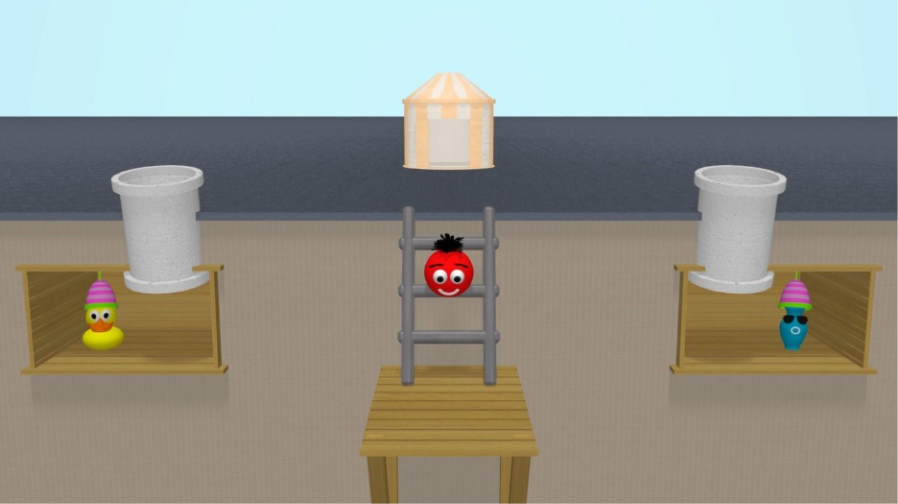
CEU researchers Bálint Varga and Ágnes Melinda Kovács first asked if infants see a connection between others’ uncertainty and information seeking. They showed 14-month-old babies a cartoon about a character always picking a duck over a fish.
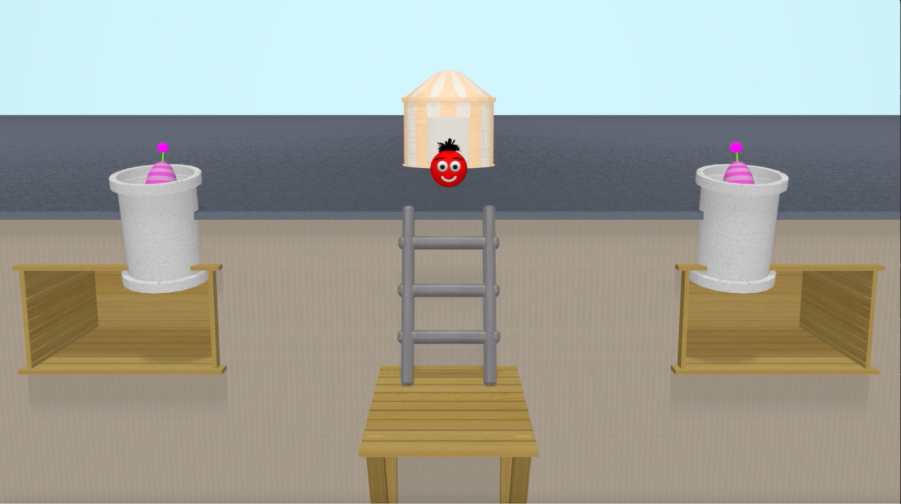
The animals then hid in separate boxes. In some scenarios, the character watched the animals hide; in others, he missed the hiding process and could only see the identical hats of the duck and fish poking out. In both cases, the character took a detour to a platform to peek inside the boxes rather than approaching one directly.
The results were clear: the babies watched the scene longer (a sign of surprise) when the character took the detour despite already knowing where the duck was. However, when the character had missed the hiding, the detour made sense to them. Notably, the babies always knew where the duck was; only the character's knowledge varied. This suggests that 14-month-olds expect others to seek information when they are uncertain about something relevant to their goals.
The team then investigated if babies have similar intuitions about novelty. Participants watched animations where the character either saw two new animals in full before they jumped into the boxes or only saw them halfway submerged, revealing only their hats. Again, the character used a platform to peek inside. Infants were puzzled when the character checked the boxes after having already seen the animals in full. However, if he had only seen the hats, there was something new for him to discover from the platform, and babies understood why he went there. In other words, infants also recognize curiosity as a drive for seeking information.
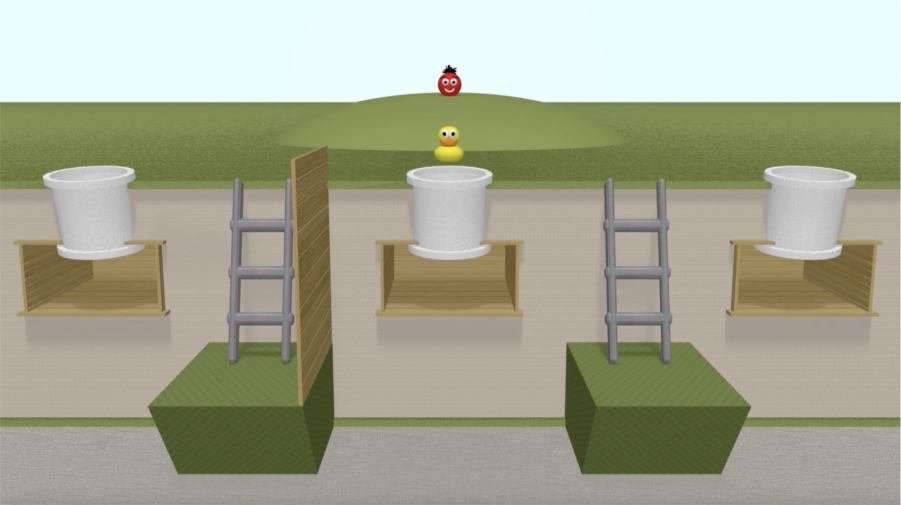
Finally, Bálint Varga and Ágnes Melinda Kovács wanted to find out whether infants assume others prefer to maximize their learning for the same amount of effort. In this scenario, a duck hid in one of three boxes. The character could choose one of two platforms: one allowed him to see into two boxes at once, while the other only revealed the contents of the third box. Even though both platforms were equally easy to reach, the babies were surprised if the character chose the one providing less information. It seems infants have an intuitive sense that if you are going to look for answers, you should look where you will learn the most.
Published in the prestigious journal Scientific Reports, these results reveal that babies possess a nuanced grasp of the principles guiding human curiosity. At a surprisingly young age, they already appreciate how valuable information is—not just for themselves, but for others.
Original paper: Varga, B., Kovács, Á.M. (2025) Human infants appreciate that information bears value for other individuals. Scientific Reports 16, 448 (2026). https://doi.org/10.1038/s41598-025-29952-w